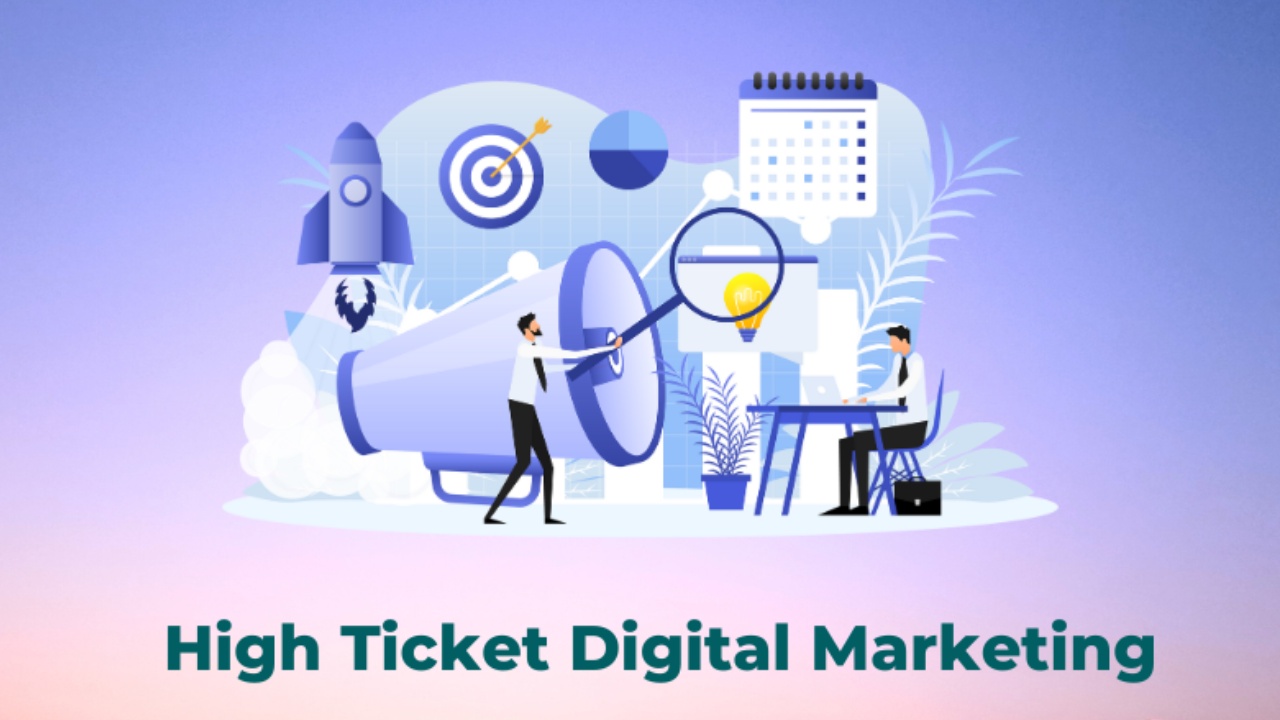
High ticket digital marketing refers to promoting and selling products or services with high price points, typically generating large revenue per client rather than relying on volume.
Instead of selling low-cost items to many customers, high ticket digital marketing focuses on acquiring fewer clients who generate higher returns per sale. This model emphasizes strategy, positioning, and trust rather than mass traffic alone.
It is about quality over quantity.
What “High Ticket” Actually Means
In digital marketing, “high ticket” generally refers to offers that range from:
- $1,000 and above
- Premium services
- Consulting packages
- Advanced courses
- Enterprise-level solutions
- Luxury products
The exact threshold depends on industry context, but the defining factor is substantial revenue per conversion.
How High Ticket Digital Marketing Works
High ticket marketing relies on:
- Precise audience targeting
- Strong authority positioning
- Trust-building content
- Strategic funnels
- Personalized sales processes
Unlike low-cost e-commerce, where impulse purchases are common, high ticket sales require nurturing.
The buying cycle is longer. The decision process is deeper.
Key Components of High Ticket Strategy
1. Clear Positioning
You must communicate exactly who the offer is for and why it commands a premium price.
2. Authority and Trust
High ticket buyers evaluate credibility carefully. Case studies, testimonials, and professional presentation are essential.
3. Targeted Traffic
Paid ads, SEO, and LinkedIn outreach often focus on highly specific audiences.
4. Funnel Structure
High ticket funnels may include:
- Lead magnets
- Strategy calls
- Webinars
- Consultations
- Follow-up sequences
The goal is qualification before conversion.
Why High Ticket Marketing Appeals to Businesses
Businesses prefer high ticket models because:
- Fewer sales can generate significant revenue
- Marketing budgets can be justified more easily
- Client relationships are often longer-term
- Customer lifetime value increases
However, expectations are also higher.
Challenges of High Ticket Digital Marketing
High ticket strategies require:
- Strong messaging clarity
- Sales process alignment
- Professional brand perception
- Technical tracking
- Conversion optimization
Mistakes become costly when each lead carries high value.
Low trust or weak positioning reduces results quickly.
High Ticket vs Low Ticket Marketing
Low ticket marketing focuses on:
- Volume
- Broad targeting
- Quick conversions
- Simplified funnels
High ticket marketing focuses on:
- Precision
- Authority
- Long-term relationships
- Structured qualification
Both models can succeed. The strategy differs significantly.
How RanksGiving Approaches High Ticket Strategy
At RanksGiving, high ticket digital marketing is approached as a system.
The focus includes:
- Aligning SEO with intent-driven buyers
- Structuring websites for trust and credibility
- Designing conversion-focused funnels
- Strengthening authority through content depth
- Measuring lead quality, not just lead quantity
The goal is predictable, high-value acquisition.
The Practical Takeaway
High ticket digital marketing is the strategy of promoting premium offers to a targeted audience with a structured, trust-driven approach.
It prioritizes authority, clarity, and conversion quality over traffic volume.
When executed properly, fewer conversions can generate substantial growth.
The difference lies in positioning and system design.