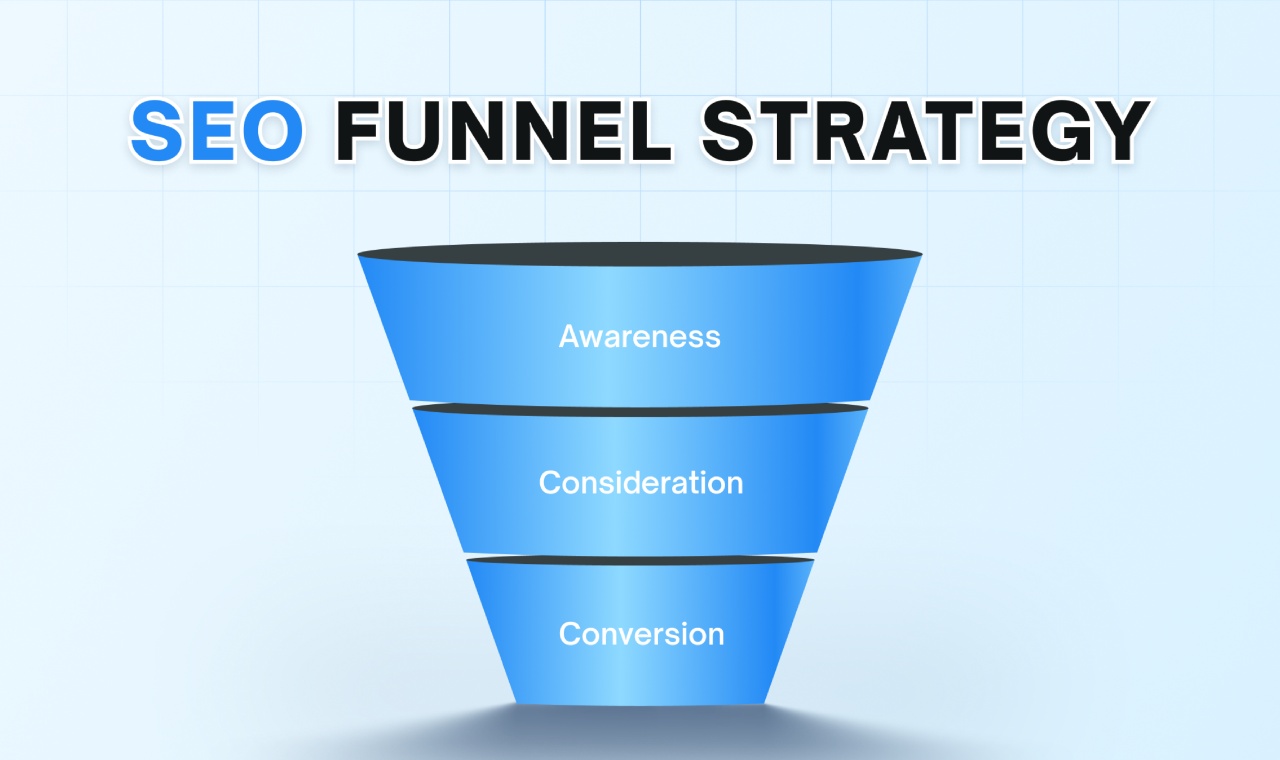
The SEO funnel is the process of guiding users from search visibility to conversion through different stages of content and intent.
Not every person searching on Google is ready to buy immediately. Some are learning, some are comparing options, and some are ready to take action. The SEO funnel structures content around these stages so businesses can attract, educate, and convert users over time.
SEO is not just about rankings. It is about moving users through decisions.
Understanding the SEO Funnel
The SEO funnel is usually divided into three stages:
- Top of Funnel (TOFU)
- Middle of Funnel (MOFU)
- Bottom of Funnel (BOFU)
Each stage targets different search intent.
Top of Funnel (TOFU)
This stage focuses on awareness.
Users are:
- Researching
- Learning
- Exploring problems
Searches may look like:
- “What is SEO?”
- “How does digital marketing work?”
- “Why is website speed important?”
Content at this stage includes:
- Educational blog posts
- Beginner guides
- Informational articles
The goal is visibility and trust.
Middle of Funnel (MOFU)
At this stage, users understand the problem and begin evaluating solutions.
Searches may include:
- “Best SEO tools”
- “SEO agency vs freelancer”
- “Shopify SEO comparison”
Content here includes:
- Comparisons
- Case studies
- Strategy breakdowns
- Service explanations
The goal is consideration.
Bottom of Funnel (BOFU)
This is the conversion stage.
Users are close to taking action.
Searches may include:
- “Hire SEO agency”
- “SEO consultant near me”
- “Best B2B SEO company”
Content here includes:
- Service pages
- Landing pages
- Consultation offers
- Pricing pages
The goal is conversion.
Why the SEO Funnel Matters
Without funnel structure:
- Traffic becomes unfocused
- Conversion rates stay weak
- Content lacks direction
A funnel ensures content serves different stages of the buyer journey.
This creates a more complete SEO system.
SEO Funnels Build Long-Term Trust
Most users do not convert immediately.
They often:
- Discover your content
- Read multiple pages
- Compare options
- Return later to buy or inquire
The funnel supports this process naturally.
Trust compounds over time.
Internal Linking and Funnel Movement
Strong SEO funnels use internal linking strategically.
For example:
- A beginner blog links to a comparison guide
- A comparison guide links to a service page
This moves users deeper into the funnel.
SEO and conversion strategy work together.
Common SEO Funnel Mistakes
Many websites fail because they:
- Only target top-of-funnel traffic
- Ignore buyer intent
- Lack conversion-focused pages
- Create disconnected content
Traffic alone does not guarantee business growth.
Structure matters.
How RanksGiving Approaches SEO Funnels
At RanksGiving, SEO funnels are built as connected systems.
The focus includes:
- Aligning content with search intent
- Structuring internal linking pathways
- Balancing informational and commercial content
- Optimizing for both visibility and conversion
The goal is not just attracting visitors, but guiding them toward action.
The Practical Takeaway
The SEO funnel is the process of moving users from awareness to conversion through strategically structured content.
It combines:
- Search intent
- Content strategy
- Internal linking
- Conversion optimization
Good SEO attracts traffic.
Strong funnel structure turns traffic into results.