
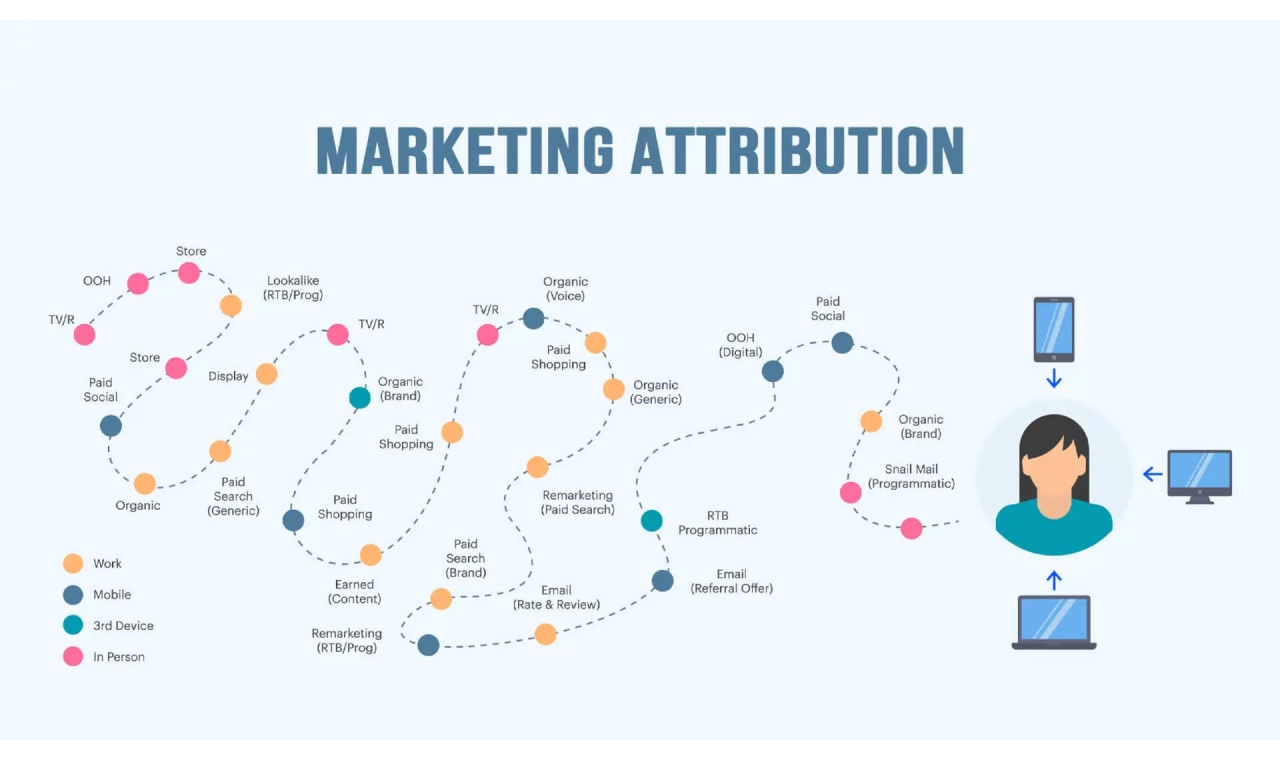
Attribution in digital marketing is the process of identifying which marketing channels or touchpoints contributed to a conversion, sale, or customer action.
In simple terms, attribution helps businesses understand where results are actually coming from. Instead of guessing whether SEO, ads, email, or social media caused a sale, attribution assigns value to different interactions in the customer journey.
It connects marketing activity to outcomes.
Why Attribution Matters
Modern customer journeys are rarely simple.
A customer might:
- Discover your brand through Google
- Follow you on Instagram
- Click an email campaign later
- Finally convert through a paid ad
Without attribution, it becomes difficult to know which channels influenced the decision.
Attribution creates visibility into the process.
What Attribution Tracks
Attribution helps measure the impact of:
- SEO traffic
- Paid advertising
- Social media campaigns
- Email marketing
- Referral traffic
- Content marketing
It shows how users move through marketing channels before converting.
Common Attribution Models
Different attribution models assign value differently.
Last-Click Attribution
This gives 100% credit to the final interaction before conversion.
Example:
A user clicks a Google ad and buys immediately.
The ad gets all the credit.
This model is simple but often incomplete.
First-Click Attribution
This gives all credit to the first interaction.
Example:
A user first finds your blog through SEO, then converts weeks later through email.
SEO receives full credit.
This model emphasizes discovery.
Linear Attribution
Credit is distributed evenly across all touchpoints.
Example:
SEO, social media, and email all share equal value.
This provides a broader view of the customer journey.
Time Decay Attribution
Touchpoints closer to conversion receive more credit.
This reflects how recent interactions often influence final decisions more strongly.
Data-Driven Attribution
Advanced systems use real behavioral data to assign value dynamically.
Platforms like Google Ads and GA4 increasingly use this model.
It is more flexible and behavior-focused.
Why Attribution Is Difficult
Attribution is not perfect because users move across:
- Devices
- Platforms
- Browsers
- Sessions
A customer may:
- Discover you on mobile
- Return later on desktop
- Convert after several visits
Tracking all of this accurately is challenging.
Attribution and SEO
SEO often gets undervalued without attribution.
Why?
Because SEO commonly influences:
- Early research stages
- Educational discovery
- Brand awareness
But conversions may happen later through another channel.
Good attribution reveals SEO’s real impact.
Attribution Helps Budget Decisions
When businesses understand attribution, they can:
- Invest in high-performing channels
- Reduce wasted spending
- Improve campaign strategy
- Understand customer behavior better
Without attribution, marketing decisions become assumptions.
Common Attribution Mistakes
Businesses often:
- Rely only on last-click data
- Ignore assisted conversions
- Overvalue paid traffic
- Undervalue organic discovery
This creates distorted decision-making.
Marketing channels usually work together.
How RanksGiving Approaches Attribution
At RanksGiving, attribution is treated as part of performance strategy.
The focus includes:
- Understanding full customer journeys
- Connecting SEO with conversion paths
- Tracking meaningful business outcomes
- Avoiding vanity-metric reporting
The goal is clarity, not inflated numbers.
The Practical Takeaway
Attribution in digital marketing helps identify which channels contribute to conversions and business growth.
It provides visibility into how customers discover, engage with, and eventually choose a business.
Good attribution improves strategy.
Better strategy improves results.