
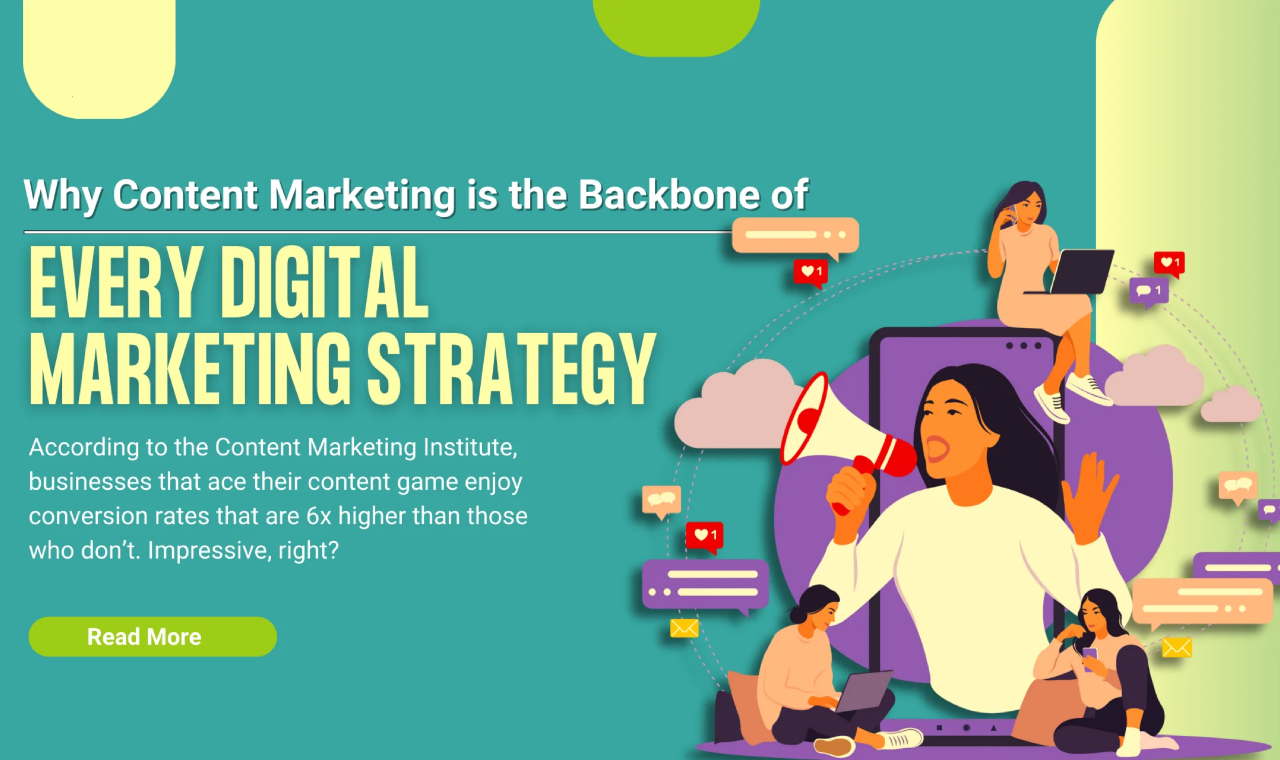
Content marketing supports digital marketing by attracting potential customers, building trust, improving search visibility, and guiding people toward a purchase decision.
Most digital marketing channels depend on content in some way. SEO needs content to rank. Social media needs content to engage audiences. Email marketing needs content to nurture leads. Even paid advertising often relies on content-driven landing pages to convert visitors.
Content is not a separate marketing activity.
It is the foundation that supports nearly every digital marketing channel.
What Is Content Marketing?
Content marketing is the creation and distribution of valuable information designed to attract and educate a target audience.
Examples include:
- Blog articles
- Guides and tutorials
- Videos
- Infographics
- Case studies
- Email newsletters
The goal is not to sell immediately.
The goal is to build trust and create demand over time.
Content Marketing Supports SEO
Search engines need content to understand what a website is about.
Quality content helps businesses:
- Rank for target keywords
- Build topical authority
- Earn backlinks naturally
- Capture organic traffic
Without content, SEO opportunities are limited.
Every page that ranks in Google is content in one form or another.
Content Marketing Builds Trust
Most customers do not buy from a business the first time they discover it.
They usually:
- Research a problem
- Compare options
- Evaluate credibility
- Make a decision
Content helps at every stage.
Useful content positions a business as knowledgeable and trustworthy.
Trust often comes before conversion.
Content Supports Social Media Marketing
Social media platforms need a steady flow of content.
Businesses use content to:
- Educate followers
- Start conversations
- Increase engagement
- Build brand awareness
Without quality content, social media becomes repetitive and ineffective.
Content gives people a reason to pay attention.
Content Improves Lead Generation
Well-structured content attracts visitors who are actively searching for information.
Examples include:
- Industry guides
- Buying advice
- Problem-solving articles
- Educational resources
These visitors are often more qualified than those reached through interruption-based marketing.
Content attracts intent-driven audiences.
Content Helps Email Marketing Perform Better
Email marketing depends heavily on content quality.
Useful content can:
- Increase open rates
- Encourage clicks
- Build long-term relationships
- Nurture leads toward conversion
People stay subscribed when they receive value consistently.
Content Supports Paid Advertising
Even paid campaigns rely on content.
Ads typically direct users to:
- Landing pages
- Product pages
- Articles
- Lead magnets
If the content on those pages is weak, conversions suffer.
Good advertising gets attention.
Good content closes the gap between interest and action.
Content Works Across the Entire Buyer Journey
Content supports every stage of decision-making.
Awareness Stage
Users search:
- “What is SEO?”
- “How does content marketing work?”
Consideration Stage
Users search:
- “Best SEO strategies”
- “Content marketing vs paid advertising”
Decision Stage
Users search:
- “Hire content marketing agency”
- “SEO services near me”
Content guides users through each stage naturally.
Why Content Creates Long-Term Value
Unlike many marketing activities, content can continue generating results long after it is published.
A strong article may:
- Rank for years
- Generate leads continuously
- Build authority over time
This creates compounding returns.
One piece of content can support growth long after publication.
Common Content Marketing Mistakes
Many businesses struggle because they:
- Publish inconsistently
- Focus only on promotion
- Ignore search intent
- Create content without strategy
- Fail to connect content to business goals
Content performs best when it is structured around audience needs.
How RanksGiving Uses Content Marketing
At RanksGiving, content marketing is treated as a growth system rather than a publishing schedule.
The focus includes:
- SEO-driven content strategy
- Search intent alignment
- Topical authority development
- Conversion-focused content structure
- Long-term traffic generation
The goal is not simply more content.
It is more qualified opportunities.
The Practical Takeaway
Content marketing supports digital marketing by attracting audiences, improving SEO, building trust, generating leads, and supporting every major marketing channel.
It strengthens:
- Search visibility
- Social media performance
- Email engagement
- Lead generation
- Conversion rates
Digital marketing creates opportunities.
Content helps turn those opportunities into business growth.